Research Projects
Enhancing Resilience of Reinforced Concrete Bridges under Multi-Hazards and Aging Threats in the Era of Global Climate Change
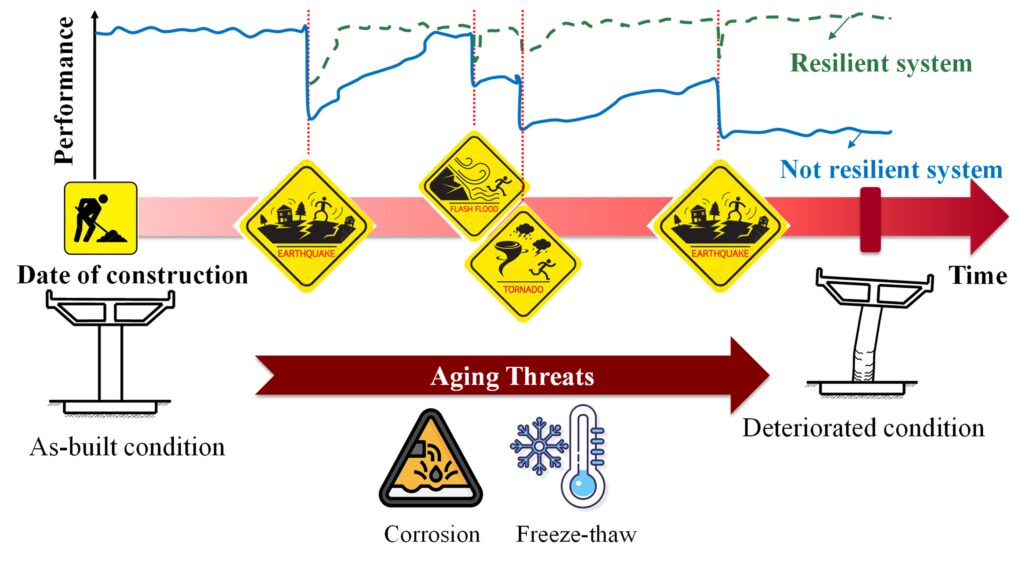
Bridges are essential to everyday life. They support the movement of people, goods, and emergency services, and they connect communities across regions. Many of the bridges currently in service across Canada were built decades ago and are now facing increasing challenges from aging materials, heavier use, and a rapidly changing climate. Floods, extreme temperatures, and human-induced seismic activity are becoming more frequent and more severe, placing growing stress on infrastructure that was not designed for these conditions.
This research addresses a fundamental question. How can we better understand, manage, and extend the life of our existing bridges so they remain safe, reliable, and cost-effective in the face of uncertainty?
The project brings together engineering science, data analytics, and artificial intelligence to develop new ways of assessing bridge performance over time. Rather than relying only on periodic inspections or simplified assumptions, the research aims to create a smarter, forward-looking approach that considers how bridges age, how different hazards may interact, and how future conditions may differ from the past. By combining physical models of structural behavior with modern data-driven tools, the work seeks to anticipate potential problems before they become critical.
A key outcome of this research is the development of a digital decision-support platform that can help infrastructure owners and policymakers make informed choices about maintenance, repair, and retrofitting. The platform is designed to answer practical questions, such as which bridges should be prioritized for intervention, when repairs are most effective, and how limited resources can be allocated to maximize safety and long-term resilience. The goal is not only to reduce the risk of failure, but also to minimize disruption, economic losses, and environmental impacts over a bridge’s full life cycle.
Sponsors


Advancing Bridge Formula through Integration of All-Terrain Cranes in Canada
Collaboration with Dr. Nima Shirzad
Have you ever thought about the glasses you wear every morning, the chair you sit on, or even the groceries you buy? Behind each of these everyday items is a quiet but essential player: the crane. From lifting heavy loads in factories and ports to building the warehouses, bridges, and hospitals that support our communities, cranes shape our lives in ways we rarely notice.
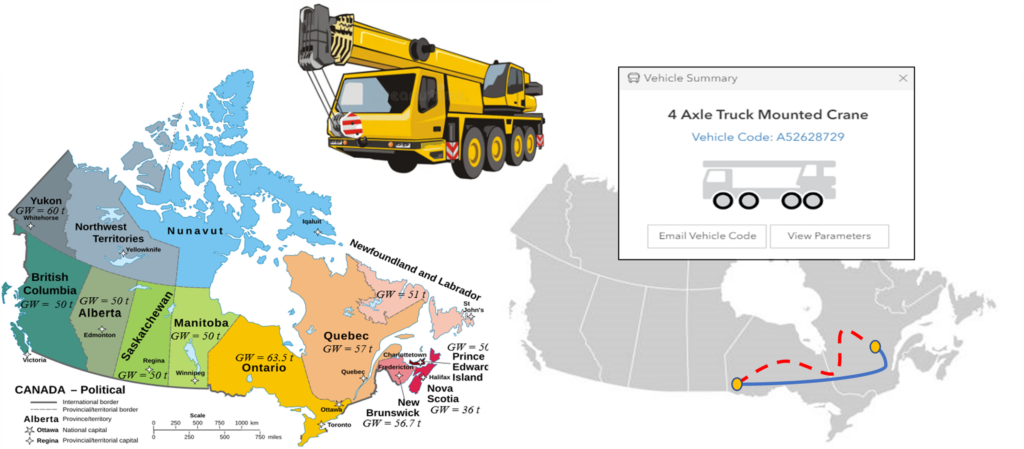
One of the biggest challenges with cranes is not the lifting; it is getting them safely across bridges. In Canada, weight regulations for bridges differ widely from one province to another. In some cases, a crane that is acceptable in one jurisdiction is stopped at the border in another unless the operator adds a dolly (an extra axle attachment) just to comply. These inconsistent and non-transparent rules create risk for industry planning, raise operating costs, and delay projects. In the end, the added costs work their way into the price of everything from housing to the glasses on your face.
The issue is that current bridge formulas were developed decades ago for heavy trucks, not tailored for specialized all-terrain cranes. Cranes have very different axle spacing, suspension systems, and load distributions, and unlike trucks, their weights are well defined and do not depend on what they are carrying. Applying truck-based formulas to cranes is unnecessarily conservative. To make things harder, many Canadian bridges are aging. To protect them, some provinces use even stricter rules. While safety must always come first, these limits often go beyond what is needed, reducing efficiency and adding cost. In practice, this approach does not support the long-term resilience of the transportation network.
This is where our project with the Canadian Crane Rental Association (CCRA) comes in. We are combining field testing, advanced finite element simulations, and reliability-based analysis to create formulas that reflect the true behavior of cranes on bridges. Instead of one-size-fits-all rules, these formulas can be tailored for the condition and age of each bridge. This ensures that safety is maintained, reliability is measurable, and efficiency is improved. We are also developing a Canadian-tailored decision-support platform, inspired by Australia’s HVAMS system but built for our bridges, cranes, and regulations. This platform will provide a complete routing and permitting process. Operators will enter their crane configuration and trip details, and the tool will automatically generate a safe route by checking each bridge along the way. Regulators, in turn, will have a transparent, science-based permitting process that works consistently across provinces.
The benefits go well beyond the crane industry. Optimized routes mean fewer detours, lower fuel use, and reduced carbon emissions. The permitting process becomes faster, more reliable, and less costly, which in turn lowers construction costs across the country. At the same time, the system supports resilience by allowing infrastructure to be used more efficiently, even as bridges age, without compromising safety. Provincial governments have already expressed strong interest in this project, recognizing the value of a unified, transparent, and science-based system.
This project is about more than just cranes and bridges. It is about connecting advanced engineering with everyday life, addressing risk, reliability, and resilience in how we move critical equipment across our infrastructure. It is also a reminder that even something as distant as a crane crossing a bridge can ultimately affect the price of the glasses you wear each day.
Sponsors


Enhancing the Durability of Aging Water Infrastructure: Investigating Creep Behavior in Cured-in-Place Pipe Composites
Collaboration with Dr. Clayton Pettit, Dr. Carlos Cruz Noguez, and Dr. Samer Adeeb
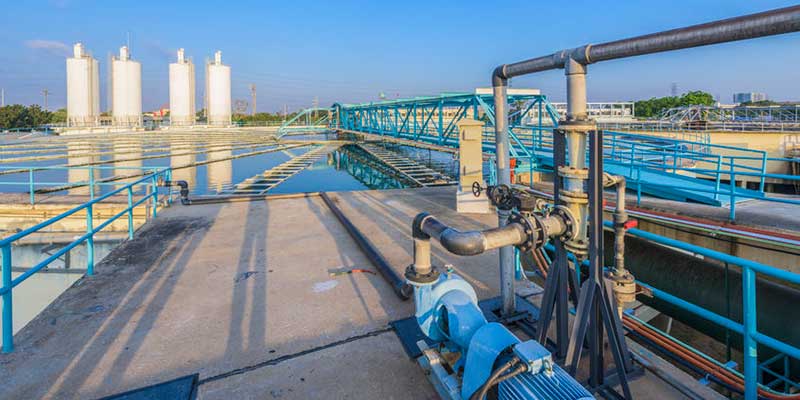
This research project addresses the critical challenge of aging water infrastructure by improving the long-term performance and reliability of Cured-in-Place Pipe (CIPP) composite materials. While CIPP technology offers an effective and minimally disruptive solution for rehabilitating water systems, its long-term behavior under sustained loads is not well understood. This research aims to fill that gap by (1) characterizing the time-dependent creep behavior of CIPP composites and (2) developing and validating predictive models to forecast their long-term performance. The study will focus on two key lay directions, i.e., hoop and axial, using ASTM standards for creep-rupture testing.
Advanced tools, including Digital Image Correlation (DIC) and instrumentation, will be used for data collection and post-processing, providing high-resolution, real-time data on material deformation. These insights will help generate creep-rupture curves, which will support the development of predictive models to improve CIPP design processes and material reliability in real-world applications.
In collaboration with Fer-Pal, the only Canadian-based company producing CIPP products entirely within Canada, this project aims to validate the long-term performance of Fer-Pal’s CIPP. Fer-Pal seeks to demonstrate a lifespan exceeding 100 years, comparable to traditional pipe materials like ductile iron and PVC. Validating this performance will position Fer-Pal’s CIPP product as a reliable trenchless pipe replacement.
The project’s outcomes include reduced maintenance costs, extended infrastructure lifespans, and improved water system reliability. Additionally, the research will support new standards and regulations for CIPP technology, offering economic and environmental benefits. It will also enhance the safety and resilience of water infrastructure, particularly benefiting Indigenous communities, while advancing Canada’s sustainability goals and leadership in water infrastructure innovation.
Sponsors

Reliability-Based Design Framework for Flood-Resistant Timber Buildings Considering Long-Term Moisture-Induced Degradation
Collaboration with Dr. Ying H Chui
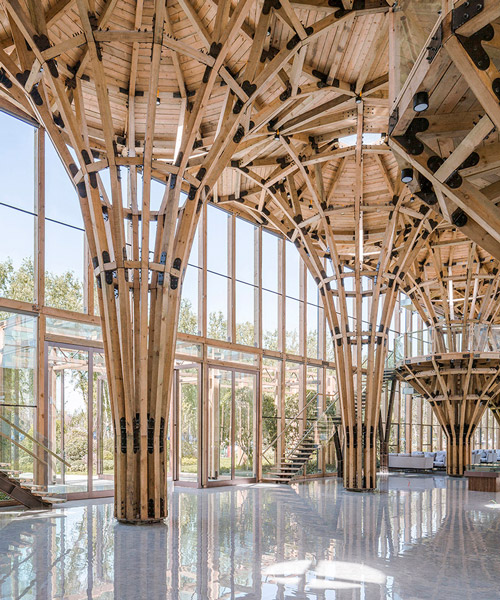
Timber buildings are increasingly used as a low-carbon solution for modern construction, but their long-term performance under flooding and sustained moisture exposure remains a critical concern, particularly as climate change increases the frequency and severity of flood events. While immediate post-flood damage is often considered, moisture can continue to penetrate and degrade timber components over time, gradually reducing stiffness, strength, and overall structural reliability. Current design approaches do not consistently quantify these time-dependent effects or the uncertainties associated with material variability, exposure conditions, and future climate demands.
This project develops a reliability-based design framework for flood-resistant timber buildings that explicitly accounts for long-term moisture-induced degradation. The framework integrates probabilistic modeling of degradation mechanisms with structural performance assessment to estimate how safety margins evolve over a building’s service life under realistic exposure scenarios. The outcome will be a rational, risk-informed basis for design and decision-making that supports code-aligned reliability targets, enables comparison of mitigation strategies, and helps engineers identify when enhanced detailing, protection systems, or inspection and maintenance plans are needed.
Overall, this work supports the safe expansion of timber construction by strengthening confidence in its long-term resilience under climate-driven flooding, and by providing practical tools to guide design, mitigation, and life-cycle planning.
Sponsors
Reliability-based Evaluation of Pipelines under crack defects and corrosion
Collaboration with Dr. Samer Adeeb
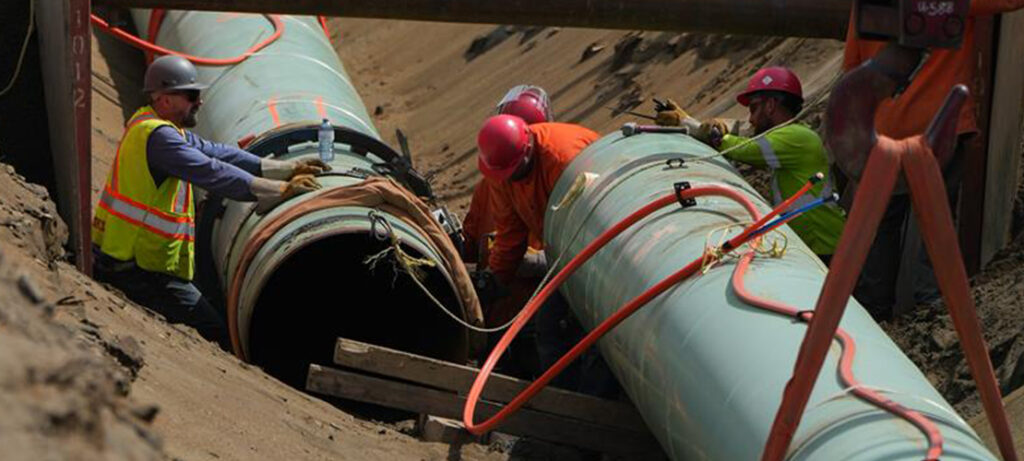
This project focuses on improving the reliability assessment of pipelines affected by cracks and corrosion, which are among the most critical threats to pipeline safety and environmental protection. Current industry assessment methods often simplify complex defect geometries by replacing detailed crack and corrosion profiles with equivalent or effective areas. While this approach is practical, it introduces uncertainty when used in probabilistic reliability analysis, particularly because inspection tools quantify uncertainty for the actual defect profiles rather than for their simplified representations.
The objective of this research is to evaluate the safety and accuracy of using effective-area models within a reliability-based framework, compared to analyses that explicitly account for the detailed geometry of crack and corrosion defects. By systematically comparing probabilities of failure obtained from both representations, the project will quantify the conditions under which simplified models remain reliable and identify appropriate uncertainty bounds when they are used. The work integrates advanced reliability methods with industry-standard assessment models and real inspection data to ensure practical relevance.
The outcomes of this project will support more accurate and risk-informed pipeline integrity management by reducing unnecessary conservatism while maintaining safety. In doing so, the research provides pipeline operators with improved tools to prioritize repairs, optimize maintenance decisions, and enhance public and environmental safety through better-informed reliability assessments.
Sponsors

Risk Management of Bridges subjected to Scour Effect
Collaboration with Dr. Yong Li
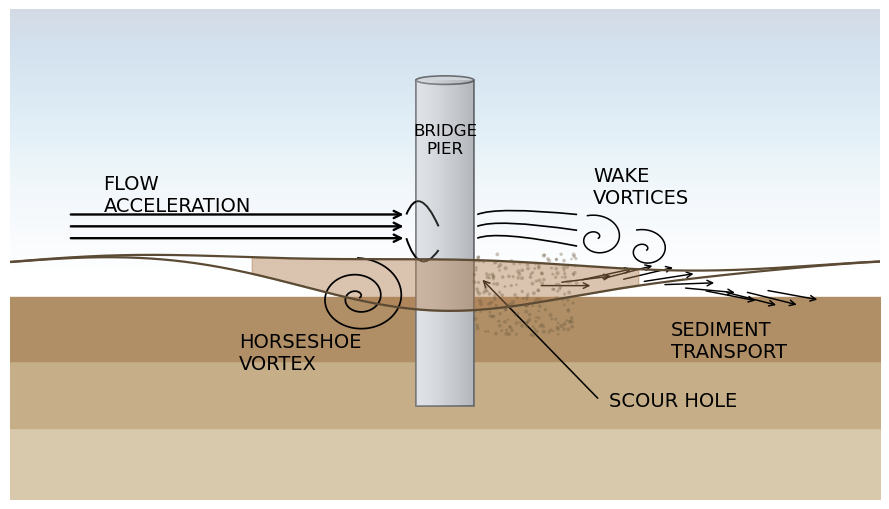
Scour, which is the erosion of riverbed material around bridge foundations during high flows, is one of the most critical threats to bridge safety and serviceability. It is particularly challenging because scour develops under highly uncertain conditions, including variable flood intensity and duration, changing channel morphology, and site-specific soil and foundation characteristics. As extreme hydrologic events become more frequent under climate change, the likelihood of severe scour, and the consequences of unanticipated foundation exposure, are increasing for many existing bridges.
This project focuses on developing a risk management framework for bridges subjected to scour by explicitly linking scour demand to structural performance in a probabilistic setting. The work quantifies how uncertainty in scour depth and evolution affects foundation capacity, structural response, and the probability of adverse outcomes, including loss of functionality or failure. The framework is intended to support rational decision-making for inspection, monitoring, and intervention planning, including prioritization of assets, timing of actions, and evaluation of mitigation strategies under limited resources.
Overall, the project provides a structured, risk-informed basis for managing scour hazards in bridge networks, improving the consistency and defensibility of decisions, and supporting more resilient infrastructure systems under future climate and flood uncertainty.
FE Modeling of Lap-Splices in Reinforced Concrete Structures
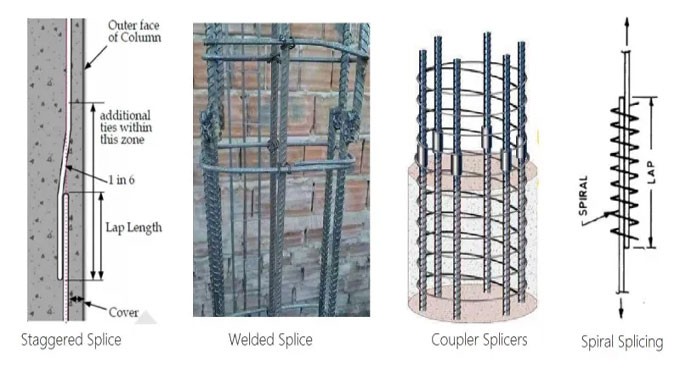
Lap splices are commonly used to transfer forces between reinforcing bars in reinforced concrete members, but their performance depends on bond behavior and detailing and can become critical under high demand or deterioration. If not properly captured, lap-splice response can lead to premature slip and strength loss that affects the overall safety and ductility of reinforced concrete components.
This project develops finite element models that explicitly represent lap-splice mechanisms, including bond-slip, cracking, and confinement effects, so that both local slip behavior and its impact on member-level response can be predicted more reliably. The outcomes will support more defensible assessment of existing reinforced concrete structures and better-informed retrofit and detailing decisions.
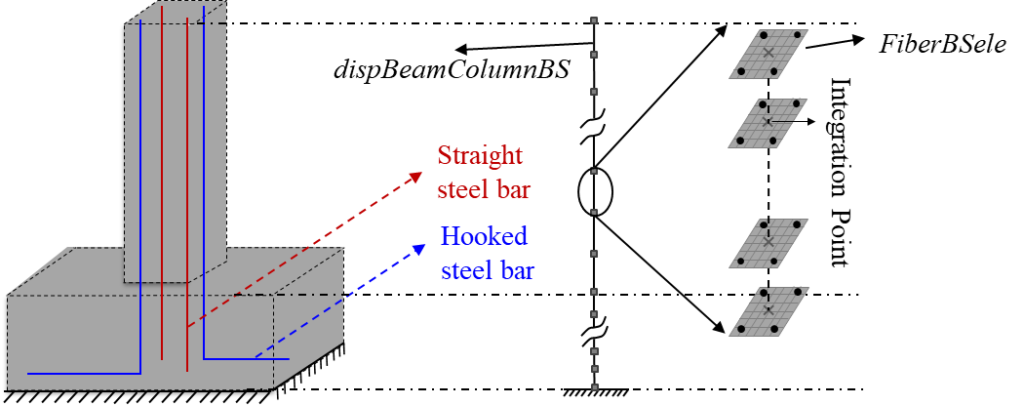
Assessing Steel Bar Slippage along Anchorage in Reinforced Concrete Columns
Anchorage performance plays a critical role in the safety of reinforced concrete columns, particularly under extreme loading such as earthquakes. Steel bar slippage along the anchorage region can lead to loss of stiffness, reduced strength, and premature failure, yet this behavior is often simplified or overlooked in structural assessment and design.
This project focuses on assessing steel bar slippage along anchorage regions in reinforced concrete columns by examining the interaction between bond behavior, anchorage length, and structural response. The work aims to clarify how anchorage detailing influences slip development and overall column performance, providing improved insight to support more reliable assessment of existing structures and more rational anchorage design and retrofit decisions.
Reliability-Based Code Calibration of Steel Gerber Systems
Collaboration with Drs. Robert Driver, Ali Imanpour, and Yong Li
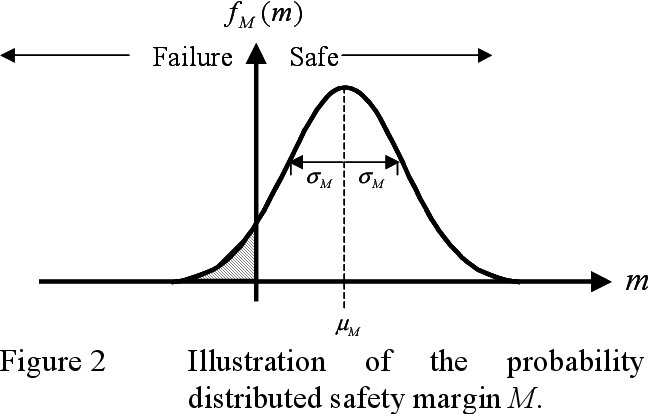
This project evaluates a newly developed design procedure for steel girders in Gerber systems and calibrates it using reliability-based methods for implementation in CSA S16. The work assesses whether the proposed procedure achieves appropriate target reliability levels across representative design cases, while explicitly accounting for uncertainties in loads, resistance, geometry, and modeling assumptions.
The outcome is a code-ready calibration of the new procedure, including recommended resistance factors and targeted refinements needed to ensure reliability consistency. Overall, the project supports the safe and practical adoption of the new Gerber system design approach within CSA S16, while avoiding unnecessary conservatism and improving consistency in steel girder design.
Sponsors